Custom Calendar Printing: A Year-Round Marketing Tool
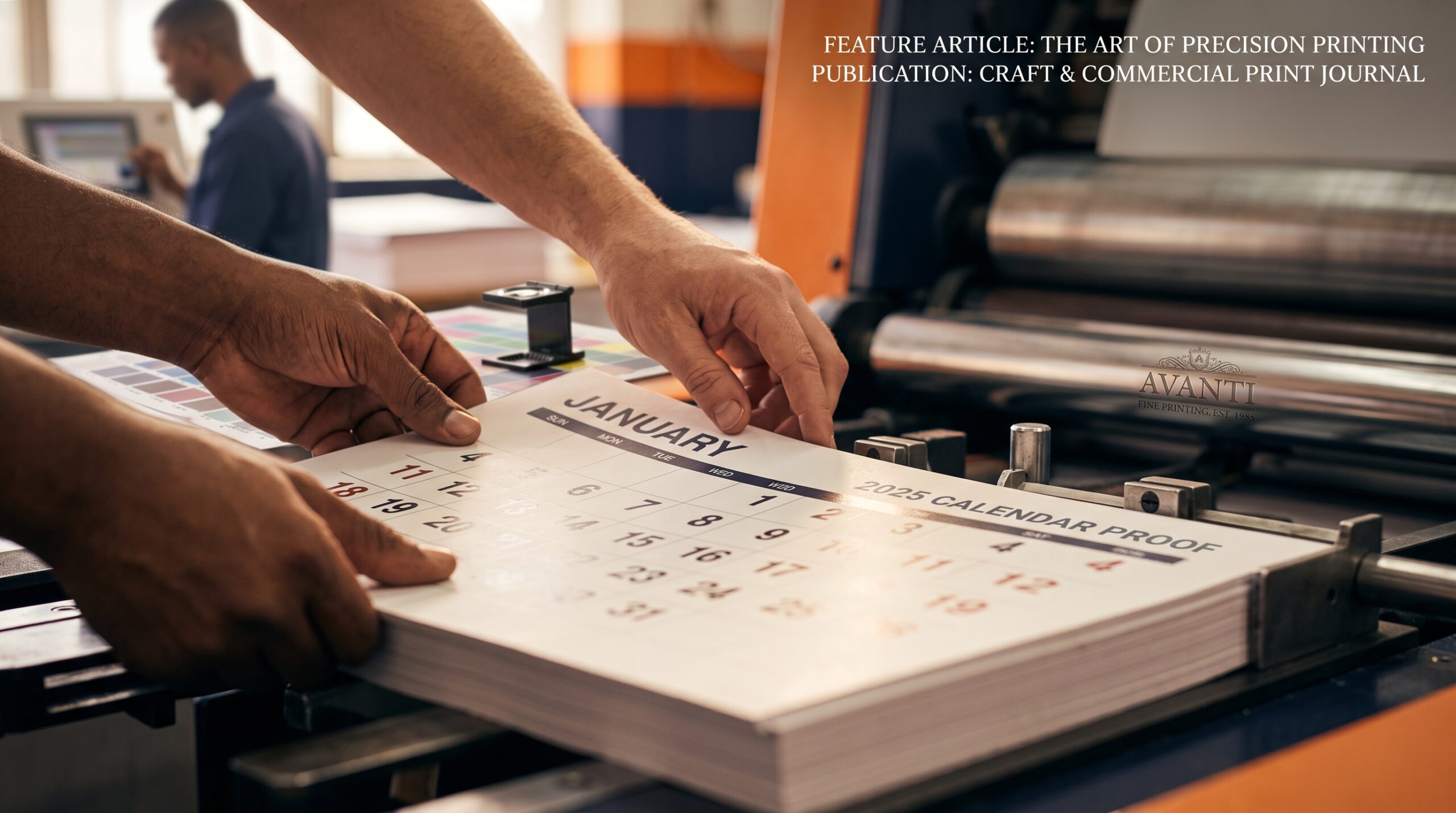
Custom calendar printing remains one of the most cost-effective ways to keep your brand in front of clients every single day. Unlike a business card that gets filed away or a digital ad that gets scrolled past, a printed calendar hangs on a wall or sits on a desk for 365 days. It is a functional item people actually use, which means your logo gets repeated exposure without being intrusive. This guide covers how to plan, design, and order calendars that deliver a return on investment long after the new year begins.
Why Printed Calendars Still Work in a Digital World
Digital calendars on phones are convenient, but they don’t build brand recognition. A physical calendar occupies physical space in a home or office. Every time someone checks a date, jots down a reminder, or schedules a meeting, they see your company name. That is thousands of impressions over the course of a year for a fraction of a cent per view.
There is also a psychological factor. Receiving a high-quality calendar feels like a gift, not an advertisement. It builds goodwill. For real estate agents, insurance brokers, contractors, and medical offices, this personal touch is often the difference between being remembered and being forgotten when a referral opportunity arises.
Who Should Use Custom Calendars?
Custom calendars are not for every business, but they are perfect for specific industries where repeat business and referrals drive revenue.
- Real estate agents: Clients hang them on refrigerators. Every month, the agent’s face and phone number are visible to the entire household.
- Financial advisors: A desk calendar with tax deadlines or investment tips positions you as a helpful resource, not just a salesperson.
- Medical and dental practices: Appointment reminders and health tips printed on a calendar keep your practice top-of-mind for routine checkups.
- Trades and contractors: Plumbers, electricians, and landscapers stay booked by being the first call when a problem arises. A calendar on the garage wall ensures that.
- Churches and nonprofits: Event schedules and fundraising dates printed on a calendar help your congregation or donor base stay involved.
Types of Custom Calendars: Which Format Fits Your Goal?
The right format depends on your budget, your audience, and how much information you need to share. Here is a breakdown of the most common options.
| Format | Best For | Typical Size | Cost Range (per unit) |
|---|---|---|---|
| Wall Calendar (12-page) | Maximum visibility, long-term brand exposure | 11″ x 17″ or 12″ x 24″ | $2.50 – $8.00 |
| Desk / Tent Calendar | Office professionals, close-up daily interaction | 5″ x 7″ or 6″ x 8″ | $1.50 – $4.00 |
| Magnetic Calendar | Contractors, auto shops, any business on a metal surface | 4″ x 6″ or 5″ x 7″ | $1.00 – $3.00 |
| Postcard Calendar | Low-cost direct mail, budget-friendly giveaways | 4″ x 6″ or 5″ x 7″ | $0.30 – $0.80 |
| Planner / Spiral-Bound | High perceived value, corporate gifts | 8.5″ x 11″ | $8.00 – $20.00 |
Wall calendars give you the most space for imagery and branding. Magnetic calendars are cheap to produce and stick around (literally) on toolboxes and filing cabinets. Spiral-bound planners feel premium but cost significantly more per unit, so they are usually reserved for top clients or employee gifts.
Paper Stock and Finishing Options
Don’t let paper quality be an afterthought. A flimsy calendar feels cheap and gets tossed. For wall calendars, use 100 lb or 14 pt cover stock. It holds up to being flipped daily and resists tearing at the binding holes. For desk calendars, a matte finish reduces glare under office lighting. Aqueous coating or UV coating protects the surface from fingerprints and spills, which matters in a kitchen or workshop environment.
How to Design a Calendar That Gets Used
A beautiful photo calendar is nice, but a functional one gets used. Functionality drives the daily impressions you are paying for. Your design needs to balance aesthetics with utility.
Layout and Readability
Date numbers should be large and bold. Leave enough white space in each date cell for people to write appointments. If your audience is older, increase the font size. The month name and year should be instantly readable from across the room. Avoid dark background colors behind the date grid—they make it hard to read and harder to write on.
Branding Placement
Your logo belongs in a consistent spot, usually the top or bottom of each page. Do not make it enormous. A subtle, professional placement on every page reinforces your brand without feeling like a billboard. The back cover is prime real estate for contact information, a map, a list of services, or a promotional offer. Many businesses print a referral line on the back: “Mention this calendar for 10% off your next service.”
Seasonal and Local Content
Include relevant dates that matter to your audience. A landscaping company should mark the first and last frost dates. A tax accountant should highlight filing deadlines. A school or sports club should note holidays and breaks. When your calendar provides useful local information, it becomes a reference tool, not just a decoration.
Printing Quantities and Budget Planning
Ordering calendars is a volume game. The per-unit price drops significantly as your quantity increases. A run of 100 wall calendars might cost $6 each, while a run of 1,000 might drop to $3 each. That is the difference between a $600 project and a $3,000 project.
Set your budget first, then work backward. Determine how many clients, prospects, and referral sources you want to reach. A good rule of thumb is to order 20% more than your initial list, because you will inevitably meet new people in November and December who should get one.
Lead Times and Ordering Windows
Do not wait until December. The best time to order is September or early October. Printers have limited capacity in November, and rush fees can add 25–50% to your total cost. A standard 12-page wall calendar takes 5–10 business days to print, plus 3–7 days for shipping. If you need proofing time or a second revision, add another week. Plan for delivery by the first week of November so you can distribute calendars before the holiday rush.
Common Mistakes to Avoid
Most calendar projects go sideways because of avoidable errors. Here are the ones I see most often from clients.
- Skipping the proof: Always request a digital proof and check the dates against a current calendar. One wrong holiday can ruin your credibility.
- Using low-resolution images: Photos pulled from a website are usually 72 DPI. Print requires 300 DPI. Blurry images make your entire brand look unprofessional.
- Forgetting to include your website and QR code: A calendar is a physical object. Make it easy for someone to find you online. A QR code that links to your contact page or a seasonal promotion bridges the gap between print and digital.
- Ignoring the binding: Cheap spiral binding can snag and bend. For wall calendars, ask for reinforced top binding or a sturdy wire-o binding that lays flat.
- Not planning distribution: Ordering the calendars is only half the job. Decide who gets them, when, and how. Will you mail them? Hand them out at appointments? Include them in holiday gift baskets?
Distribution Strategies That Maximize ROI
How you hand out your calendars matters as much as how they look. A calendar mailed cold to a stranger is less effective than one given in person.
Start with your existing customer base. Include a calendar in every invoice or service visit during November. For your top 20% of clients, consider delivering them personally. It gives you a reason to reconnect before the end of the year. For prospects, pair the calendar with a handwritten note or a small branded gift like a pen or a notepad.
Local businesses can also partner with complementary, non-competing companies. A real estate agent can leave a stack of calendars at a local coffee shop or a home staging company. The coffee shop gets a free giveaway for its customers; the agent gets exposure to a relevant audience.
Measuring the Success of Your Calendar Campaign
Calendars are a branding play, not a direct-response tool. You won’t see a 10% redemption rate like a coupon. Instead, track softer metrics. Ask new clients how they heard about you. Notice if referral traffic spikes in January and February. The real value is in the cumulative effect of your name being seen daily.
You can add a simple tracking mechanism. Use a unique phone number extension or a specific landing page URL on the back cover. Even a simple “Mention this calendar” offer gives you a way to gauge response. If you give away 500 calendars and get 5 new clients, the campaign likely paid for itself several times over.
Working with a Commercial Printer
You have two paths: online print brokers or a local commercial printer. Online brokers offer convenience and low base prices, but they are not great for advice or troubleshooting. A local printer, like those at Commercial Printing California, can help you choose the right paper, finish, and binding for your specific audience. They can also catch design flaws before you waste money on a bad run.
When you request a quote, have your final design file ready or at least a clear spec sheet. Know your quantity, trim size, page count, paper weight, and finishing preferences. The more specific you are, the more accurate the quote will be. Ask about mailing services too—many commercial printers can handle the printing and the distribution, saving you a trip to the post office.
Frequently Asked Questions
What is the minimum order quantity for custom calendars?
Most commercial printers require a minimum of 25 to 50 units for wall calendars. Digital printing makes short runs affordable, but the per-unit cost will be higher. If you only need a handful for your top clients, a short run is still worth it. For anything under 25, you are better off buying blank calendars and printing your own inserts.
How far in advance should I order calendars for next year?
Order in September or early October. This gives you time for proofing, revisions, and shipping without paying rush fees. If you are ordering for a specific fiscal year or a school year, adjust your timeline accordingly. Nonprofits and schools often order in April or May for the following academic year.
Can I use my own photos for a custom calendar?
Yes, but they must be high resolution. A photo from a smartphone taken in good lighting can work if it is at least 300 DPI at the final print size. For a full-page 11″ x 17″ image, that means a file size of roughly 3300 x 5100 pixels. If you are unsure, ask your printer to check the resolution before you approve the proof. Blurry or pixelated photos will undermine the perceived quality of your brand.



Post Comment